 Dogs & Cats
 Cattle
 Equine
 Poultry
 Swine
Swine Goats & Sheep
 Game Bird
 Gamecock
 Deer & Wildlife
 Fish & Pond
 Rabbit
 Specialty
 Ingredients & Bulk
 Special Order
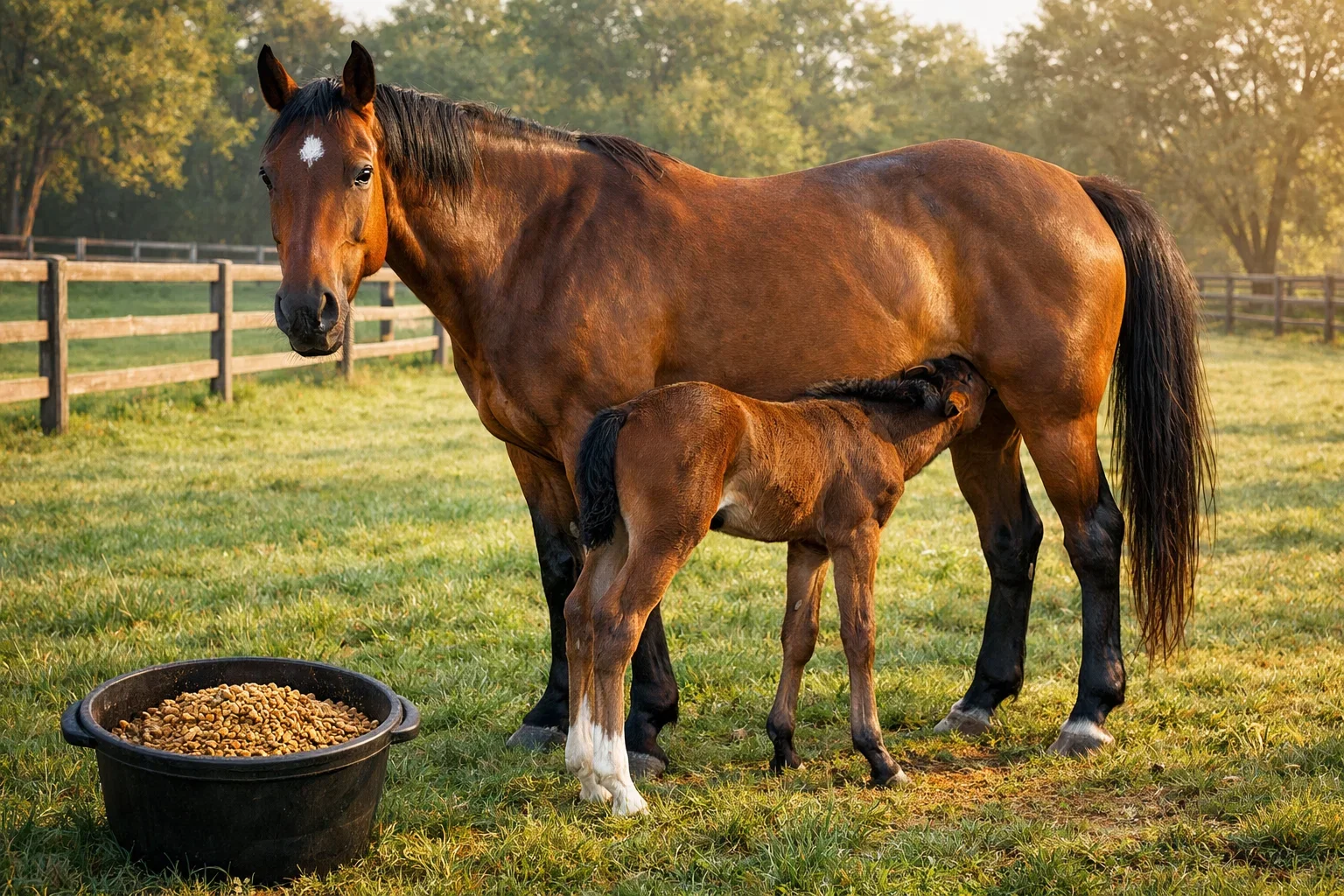
When it comes to raising healthy, strong horses, nutrition is everything. The early months and years of a horse’s life from nursing foal to yearling lay the foundation for lifelong soundness, performance, and health. Choosing the wrong feed during this critical window can result in poor skeletal development, immune deficiencies, and stunted growth that no amount of later correction can fully fix. That is why serious horse owners and breeders across the South keep coming back to Southern Supreme Mare & Foal 16/7, a specialized equine feed manufactured by Mid South Feeds. But is it truly the best option for growing horses? Let’s take a thorough look.
What Is Southern Supreme Mare & Foal 16/7?
Southern Supreme Mare & Foal 16/7 is a textured equine feed formulated specifically for horses in their most nutritionally demanding life stages: nursing foals, weanlings, yearlings, two-year-olds, and broodmares across all stages of reproduction from early pregnancy through active lactation.
The name “16/7” refers directly to its guaranteed nutritional profile: 16% crude protein and 7% crude fat. These numbers are not arbitrary. They reflect a deliberate formulation designed to meet the elevated protein needs of young, rapidly developing horses while delivering enough caloric density to support energy requirements without overloading on starchy grains.
Mid South Feeds, headquartered in Alma, Georgia, uses a fixed formula approach for this product. This means the ingredients do not rotate based on market availability or cost, which is a crucial quality marker. Inconsistent formulas are a common trigger for digestive upset in horses, and fixed formulas protect against that risk.
Nutritional Profile: What’s Inside the Bag?
Understanding what goes into a feed is the foundation of evaluating its quality. Southern Supreme Mare & Foal 16/7 contains a rich combination of high-quality ingredients: oats, cracked corn, soybean meal, molasses, alfalfa meal, vegetable oil, wheat middlings, active dry yeast, and a broad spectrum of vitamins, minerals, and probiotics.
Guaranteed Analysis Table
| Nutrient | Guaranteed Level |
| Crude Protein (Min) | 16.00% |
| Crude Fat (Min) | 7.00% |
| Crude Fiber (Max) | 8.00% |
| L-Lysine (Min) | 0.95% |
| Methionine (Min) | 0.40% |
| Calcium (Min/Max) | 0.90% – 1.40% |
| Phosphorus (Min) | 0.70% |
| Zinc (Min) | 200 ppm |
| Copper (Min) | 50 ppm |
| Selenium (Min) | 0.60 ppm |
| Vitamin A (Min) | 8,000 IU/lb |
| Vitamin E (Min) | 120 IU/lb |
| Biotin (Min) | 1.50 mg/lb |
This level of nutritional transparency is a hallmark of a quality equine feed. Many budget feeds list broad ranges or omit trace mineral guarantees altogether. The specific guarantees on L-Lysine, Methionine, Biotin, Vitamin E, and Selenium tell you that this formula is engineered with precision not assembled cheaply.
Why Protein and Fat Levels Matter for Growing Horses

Growing horses have protein requirements that are significantly higher than mature horses at maintenance. Protein is not just about muscle. In young horses, it drives bone matrix formation, tendon development, enzyme production, and immune function.
The 16% crude protein level in this feed, paired with a guaranteed 0.95% L-Lysine level, is particularly important. Lysine is the most limiting amino acid in equine diets meaning no matter how much total protein a horse consumes, if lysine is insufficient, protein synthesis is capped. By guaranteeing lysine specifically, Mid South Feeds signals a level of formulation sophistication that puts this product ahead of generic textured feeds.
The 7% fat level provides concentrated, digestible energy. Fat delivers approximately 2.25 times more energy per gram than carbohydrates and is metabolized more slowly, reducing the risk of the insulin spikes that can contribute to developmental orthopedic disease (DOD) in fast-growing foals. This is a meaningful design choice for an equine growth feed.
Equine Nutrition Fact: Growing horses between 4 and 12 months of age require up to 1.4 times more protein per unit of body weight than mature horses at maintenance. Feeding a high-quality, lysine-guaranteed feed during this window directly impacts bone density, joint health, and long-term soundness.
Skeletal Development: The Minerals That Make the Difference
One of the most frequently overlooked aspects of young horse nutrition is the mineral balance particularly the calcium-to-phosphorus ratio and the presence of trace minerals like zinc and copper in bioavailable forms.
Southern Supreme Mare & Foal 16/7 provides calcium at a minimum of 0.90% and a maximum of 1.40%, with phosphorus at a minimum of 0.70%. This maintains an appropriate Ca:P ratio, which is critical for healthy bone formation. Too much phosphorus relative to calcium, a common problem with grain-heavy rations, can lead to metabolic bone disease.
What elevates this feed further is the inclusion of Proteinate trace minerals chelated forms of zinc, copper, manganese, and cobalt. Chelated minerals are bound to amino acids or protein molecules, making them significantly more bioavailable than inorganic mineral salts. This supports hoof quality, immune function, wound healing, reproductive performance, and optimal enzyme activity.
The formula also includes 200 ppm zinc and 50 ppm copper, both at levels recognized in equine nutrition science as supportive of skeletal integrity in growing horses.
The Kelp Meal Advantage: Tasco® and Whole-Horse Wellness
One ingredient that sets this feed apart from many competitors is the inclusion of Tasco® kelp meal (Yucca Schidigera and Ascophyllum nodosum). Kelp meal is not just filler it is a functional ingredient with documented benefits in equine feeding programs.
According to Mid South Feeds, Tasco® kelp meal in this formula supports:
- Mental attitude and reduced nervousness
- Immune system function
- Hoof quality and structural integrity
- Reduced travel stress
- Enhanced muscling
For broodmares, particularly those entering the stress of foaling and early lactation, these benefits are especially valuable. Stress in mares can directly affect milk quality and foal health, making a calming, immune-supportive ingredient like kelp meal a smart inclusion.
Digestive Health: Probiotics, Yeast, and Enzymes
Southern Supreme Mare & Foal 16/7 is fortified with a robust probiotic blend including multiple Lactobacillus strains (L. acidophilus, L. casei, L. plantarum), Enterococcus faecium, Bifidobacterium longum, Bifidobacterium thermophilum, and active dry yeast (Saccharomyces cerevisiae).
This matters because young horses, especially weanlings navigating the stress of separation from their dams are prone to hindgut dysbiosis. A disrupted gut microbiome in a foal can lead to diarrhea, poor feed conversion, reduced immune response, and increased susceptibility to disease. Feeding a probiotic-fortified ration from early life supports microbiome stability and feed utilization.
Gut Health Fact: Research in equine nutrition has shown that Saccharomyces cerevisiae (live yeast) supplementation can improve fiber digestibility in horses by up to 8%, allowing growing horses to extract more nutritional value from every pound of feed consumed.
Feeding Guidelines: Practical and Flexible
Recommended Daily Feeding Rates (per 100 lb Body Weight)
| Horse Category | Feed Amount |
| Nursing Foals | 0.5 lb per 100 lb body weight |
| Weanlings | 0.75 – 1.00 lb per 100 lb body weight |
| Yearlings | 0.75 – 1.00 lb per 100 lb body weight |
| Mares in Early Lactation | 1.25 – 1.75 lb per 100 lb body weight |
These guidelines should always be paired with 1 to 1.5 lb of quality roughage (hay or pasture) per 100 lb of body weight daily. Forage remains the foundation of any healthy equine diet, and this feed is designed to complement not replace it
Who Should Use This Feed?
Southern Supreme Mare & Foal 16/7 is the right choice for:
- Weanlings and yearlings going through rapid skeletal and muscular development
- Two-year-olds still growing and entering early training
- Pregnant mares needing elevated vitamins and minerals to support fetal development
- Lactating mares with dramatically increased nutrient demands to sustain milk production
- Breeders and farms that want a consistent, fixed-formula feed with full nutritional transparency
It is not designed as a maintenance feed for idle, mature adult horses, and should not be used as such.
Final Verdict
Southern Supreme Mare & Foal 16/7 is not simply a “decent” feed for growing horses it is one of the most comprehensively formulated options in its category. The combination of guaranteed amino acids, chelated trace minerals, functional kelp meal, a robust probiotic blend, and a fixed formula philosophy addresses virtually every nutritional vulnerability of young and reproducing horses.
For breeders, farms, and horse owners who take the long view understanding that what a horse eats in its first two years shapes everything that follows this feed represents a sound, science-backed investment. It is available exclusively through authorized Mid South Feeds dealers, and the company provides a dealer locator tool at midsouthfeeds.com for those looking to source it locally.
If you are serious about raising sound, healthy horses, Southern Supreme Mare & Foal 16/7 belongs in your feeding program.
FAQs
1. What Makes Southern Supreme Mare & Foal 16/7 Suitable for Growing Horses?
Southern Supreme Mare & Foal 16/7 is designed specifically for young horses and broodmares that require higher levels of protein, fat, and essential nutrients. Its balanced formula supports muscle growth, bone development, and overall health during the most critical growth stages. The inclusion of amino acids, vitamins, and minerals helps ensure proper development and long-term soundness.
2. Why Is the 16% Protein Level Important for Foals and Young Horses?
The 16% crude protein level provides the building blocks needed for muscle formation, tissue repair, and skeletal development in young horses. Protein also supports enzyme production and immune system strength during rapid growth phases. Adequate protein intake helps prevent developmental issues and promotes balanced growth.
3. How Does the 7% Fat Content Benefit Growing Horses?
The 7% fat level provides a concentrated energy source that helps support healthy growth without relying heavily on high-starch grains. Fat is easier for horses to digest and provides more energy per gram compared to carbohydrates. This helps maintain steady energy levels and supports healthy weight gain.
4. What Role Do Amino Acids Like Lysine and Methionine Play in This Feed?
Lysine and methionine are essential amino acids that support protein synthesis and proper growth in young horses. Lysine is especially important because it is often the most limiting amino acid in equine diets. By guaranteeing these amino acids, the feed helps ensure optimal muscle and bone development.
5. Why Are Calcium and Phosphorus Levels Important in a Growth Feed?
Calcium and phosphorus are critical minerals for proper bone formation and skeletal strength in growing horses. Maintaining the correct balance between these minerals helps prevent developmental bone disorders. This feed provides a controlled ratio that supports strong and healthy skeletal growth.
6. How Do Probiotics and Yeast Support a Young Horse’s Digestive System?
Probiotics and yeast help maintain a healthy gut microbiome, which improves digestion and nutrient absorption. Young horses often experience digestive stress during weaning or dietary changes. Including beneficial microbes helps stabilize the gut and improve overall feed efficiency.